

Pirone Lambros named 2026 Princeton Council president, Fraga announces she won’t seek reelection

The Princeton governing body held its annual reorganization meeting on Wednesday, Jan. 7, swearing in two incumbents who ran unopposed for the six-member council and selecting a new council president.
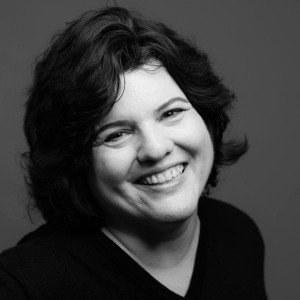
Councilwoman Michelle Pirone Lambros was unanimously elected council president, replacing Mia Sacks, who had served in the role for the past three years. State Sen. Andrew Zwicker administered the oath of office to Pirone Lambros and Sacks, who both began their third three-year terms on the council.
Pirone Lambros called 2026 a significant year for Princeton as the community approaches the nation’s 250th anniversary.
“This year’s 250th celebration should remind us that democracy’s not a gift that we inherit — it’s hard work,” Pirone Lambros said, adding that local government is where democracy is practiced daily “in real and tangible ways.”
She thanked Sacks for her leadership as council president and highlighted priorities including affordable housing, decisions about the future of the former Westminster Choir College campus, stewardship of public assets, and fiscal responsibility. She also pointed to Community Park South, which she described as a “transformational infrastructure project” intended to expand access to open space and recreation, particularly for residents of multifamily housing.
Following her remarks, councilmembers and the mayor delivered brief statements.
Councilwoman Leticia Fraga announced she will not seek reelection. “This will be my final year serving in this role,” she said, adding that she remains committed to making it a productive year.
Councilman Leighton Newlin praised the council’s 2025 decision to regulate short-term rentals and absentee ownership, describing it as a move to protect neighborhoods and preserve Princeton as a community rather than “a commodity.”
Sacks discussed long-term planning, smart growth, and climate resilience, calling climate preparedness “no longer optional” and central to fiscal responsibility and public safety. She also emphasized redevelopment as a tool to strengthen the community by revitalizing underused sites, supporting local businesses, expanding housing opportunities, and reducing pressure on open space.
Councilman David Cohen urged residents to continue working to preserve what he called Princeton’s “little island of sanity.”
Councilman Brian McDonald said he hears a recurring message from residents: a desire for more municipal services paired with lower taxes or limited increases. Princeton, he said, provides more services than most municipalities in the state and at a higher level of quality.
In his remarks, Mayor Mark Freda said he emphasizes openness and transparency while encouraging respectful disagreement among officials and residents.
“We can go to the mat on any business matter, but it is not personal, and it never should be,” Freda said.
Freda cited several issues expected to occupy the governing body in 2026, including the proposed capital budget, decisions about the Westminster Choir College campus, and work on affordable housing obligations. He said the council will set strategic goals for the year and work to improve internal communication and collaboration.
The meeting ended without public comment.
Princeton Council 2026 Reorganization Meeting Full Transcript
Mayor Mark Freda: This is the reorganization meeting of the Mayor and the Council of Princeton, New Jersey. Madam Clerk, could we have the meeting statement, please?
Municipal Clerk Dawn Mount: Notice of this meeting was provided in accordance with the requirements of the Open Public Meetings Act and state regulations governing public meetings, including the time, date, and location of the meeting, and clear and concise instructions to the public for accessing the meeting and making comments. In addition, the agenda and all related materials were posted electronically and made available to the public on Princeton’s meeting portal in advance of the meeting.
Mayor Mark Freda: Thank you. Leticia is going to do the land acknowledgement tonight.
Councilwoman Leticia Fraga: Yes, thank you. We gather today on the land of the Lenni Lenape. As members of the Princeton community, we aspire to show appreciation, respect, and concern for all peoples and our environment. We honor the Lenape and other Indigenous caretakers of these lands and waters, the elders who lived here before, the Indigenous today, and the generations to come.
Mayor Mark Freda: Thank you. Can we have a roll call of the 2026 Council?
(Mayor takes roll, all members present.)
Mayor Mark Freda: All right, if you’re able and you’d like to, please stand and join us in the Pledge of Allegiance.
All say the pledge allegiance.
Mayor Mark Freda: Thank you. Okay. One of the main reasons we’re here is we are going to swear in our “newly elected” although they’re not new—council members. And so Mia Sacks and Michelle Pirone Lambros will both get sworn in, and Senator Andrew Zwicker, I believe, is going to help with that process. So, yeah, you guys go down and we will.
Senator Andrew Zwicker issues the oath of office to Sacks and Pirone Lambros.
Mayor Mark Freda: Thank you. Okay, I guess a nomination for council president is in order.
Councilwoman Mia Sacks: I would like to nominate my esteemed and intrepid and accomplished colleague, Councilwoman Michelle Pirone Lambros.
Councilwoman Leticia Fraga: And I will second that.
Mayor Mark Freda: It’s been moved and seconded. All right. Is there any comment? All in favor, please say aye.
Council: Aye.
Mayor Mark Freda: Congratulations. All right. Now you’ve got to go back down and get sworn in.
Mayor Mark Freda: All right, luckily we’ve taken the 20-some items that need to be done at every reorganization meeting and put them on a consent agenda instead of going through them one by one, which really helps shorten the meeting quite a bit. But assuming nobody has a problem with anything that’s on the consent agenda—Leticia’s going to move the consent agenda. Is there a second?
Councilman Brian McDonald: Second.
Mayor Mark Freda: All in favor?
Council: Aye.
Mayor Mark Freda: Thank you very much. Okay, next up, we have the council president’s remarks.
Councilwoman Michelle Pirone Lambros: Thank you. Thank you. First of all, Senator Andrew Zwicker and County Clerk Paula Sollami Covello, and all of you residents, family, and friends for being here tonight. Thanks very much. I’m incredibly proud to serve this town and truly honored to work alongside my colleagues here on council. Each of you brings deep experience, commitment, and heart to our work. We may have very different backgrounds, but our diversity is what makes us a strong, thoughtful, and effective governing body. Thank you all for your trust tonight in electing me your council president.
I would like to offer a special thanks to my colleague, Mia Sacks, who has done an outstanding job as council president. Mia, you work tirelessly and are always deeply engaged. You’re responsive and accessible to all of us. I’m grateful for your leadership and for the example you’ve set for our entire council.
So as we begin our new year of service, I want to take a moment to reflect a bit on the year ahead because 2026 is really a special year for our town. Growing up here, I didn’t fully understand how deeply our town would shape me or how much perspective comes from living within a community rooted in so much history. Over time, I’ve come to appreciate the depth of that legacy and the strong sense of place that creates.
As we enter our semi-quincentennial year, I find myself in awe of Princeton’s extraordinary role in our nation’s founding and how relevant that legacy is right now. Princeton wasn’t just nearby when history happened; it was where history was made. This year’s 250th celebration should remind us that democracy’s not a gift that we inherit—it’s hard work. Every time we engage in thoughtful debate or find common ground, we help keep that 250 spirit alive.
Local government is where democracy’s practiced daily in real and tangible ways. Whether we’re debating a budget, investing in our parks and streetscapes, or ensuring that our neighborhoods are welcoming and inclusive, we’re putting democracy in action.
I look forward to building on the work that we began six years ago—work rooted in the belief that thoughtful planning and responsible investment can meaningfully improve people’s lives. That means continuing to advance affordable housing, shaping the future of Westminster, and stewarding our public assets in ways that are both forward-thinking and fiscally responsible.
And I am particularly excited about Community Park South, a transformational infrastructure project that expands access to open space and recreation, especially for residents that live in multifamily housing and who don’t have backyards.
I look forward to continuing our work on the Finance Committee, aligning our community’s ambitions with sound fiscal management, so our investments today will strengthen Princeton for the future. I look forward to working with all of you, my colleagues, our wonderful professional staff, and our community to ensure that Princeton remains a town that honors its history, meets the moment, and builds a future worthy of generations to come. Thank you.
Mayor Mark Freda: Thank you, Michelle. All right, now we’re gonna have councilmembers’ remarks, and everybody’s supposed to hold their remarks to one to two minutes, so let’s see what happens. But what I forgot to ask was…
Michelle Perone Lambros: Mine was okay?
Mark Freda: No, you were great. You set the example. Had you guys decided on an order? I forgot to ask that ahead of time. We should’ve, thanks. Are we just going down the line, or?
Councilman Leighton Newlin: Thank you, Mayor, and welcome incoming Council President Michelle Pirone Lambros, and thank you, outgoing Council President—Michelle, I mean, Mia Sacks—for your tireless work on behalf of the people of Princeton and our esteemed body. Thank you.
Before we begin tonight, we want to acknowledge the tragic loss of life that occurred today in Minneapolis during a large-scale immigration operation, which included the use of deadly force against a young woman. Regardless of whether the woman was fleeing the scene or intentionally pursuing the field agents with her vehicle, one thing is clear: this incident serves as a stark reminder of just how real, fragile, and high-stakes it is for communities across our great country. As we head into the new year, we implore our community to stay calm, show restraint, and resolve when tensions escalate.
Let us show that opposing injustice does not mean inviting chaos. It means thinking of the person next to you. It means remembering that we, the people, need to show what a civil society looks like when institutions fail to do so. Thank you.
Before I go further, I want to acknowledge our administrator, Bernie Haskovic, our municipal clerk, Dawn Mount, along with our deputy administrators, department heads, and all municipal staff. Your professionalism, institutional knowledge, and steady commitment to public service are the foundation of this municipality. The work we do at this dais does not happen without you. There is no us without you. Thank you for the care, competence, and consistency you bring each and every day.
Now I’m gonna read my remarks as fast as I possibly can. Every so often, a council decision tells the community exactly who we are and who we intend to be. I want to take a moment to express my deep appreciation and gratitude for what I believe is one of the most monumental actions this council has taken: our decision to confront our municipal value system head on by putting short-term rentals and absentee ownership in check.
Let’s be clear, this was not about restrictions for restriction’s sake. This was about protection—protection of neighborhoods, protection of families who want to live here, grow here, and stay here, protection of the idea that Princeton is a community, not a commodity. In doing this, we didn’t just regulate housing. We claimed our future. We affirmed that quality of life matters, that stability matters, and that neighborhoods are meant to be lived in, not cycled through. This is how you safeguard Princeton’s soul—not with nostalgia and simple signage, but with intentional action.
And while we often measure progress in concrete, steel, and square footage, this council has also begun the essential work of strengthening something just as vital: our human infrastructure. I want to recognize my colleague and co-chair on CARES, Leticia Fraga, and the entire Human Services Department and its leadership for their commitment to restoring, retooling, and reshaping how this municipality serves people. This work is about building community, rebuilding trust, and meeting human need with dignity, especially at a time when nationally we are struggling with how we care for one another.
Across this country, the social contract is and feels frayed. That makes local government not smaller, but more important than ever. What we do here matters because it is often the first and last place people turn when systems fail them.
As we approach the 250th anniversary of this nation, let us remember that Princeton history is not something to sanitize or selectively defend. In the Battle of Princeton, Black people and Native Americans fought on the side of America. They were present at the founding, and their presence still calls us to live up to the promise of this place.
As I enter the second year on my second term, I do so clearer in purpose, stronger in resolve, and deeply committed to the work ahead—work that balances buildings with belonging, policy with people, and progress with humanity.
Lastly, if we can protect our neighborhoods, invest in our people, and honor the full truth of our history, then Princeton won’t just look good on paper. It will feel right in the lives of all the people who call it home. That, my friends, is something I will always fight for. Thank you.
Councilwoman Leticia Fraga: Good evening, everyone. As I begin my ninth year of service on council, I find myself reflecting on the collective work that we have done. With dedication and in collaboration with my colleagues, the support of our staff, and the commitment of volunteers serving on our boards, commissions, and committees, I am deeply proud of what we have achieved together.
Over the years, I have consistently focused on advancing affordability, equity, sustainability, and quality of life. The policies and initiatives we have moved forward reflect a firm belief in community-driven solutions, and the shared responsibility to strengthen Princeton. Each step we have taken has been guided by the goal of creating a municipality that works for everyone.
As Princeton continues to grow and evolve, my priority in 2026 is to keep working to ensure our community remains a place that offers opportunity, promotes wellness, and upholds dignity and security, so that all residents have the chance to thrive. I will approach this work with the same care and dedication that has guided me throughout my time on council.
I also want to share that I have decided that I will not seek re-election, and this will be my final year serving in this role. I remain fully committed to making it a meaningful and productive year for our community, and I know there’s a lot we can accomplish even in just one year. I look forward to it. Thank you.
Councilwoman Mia Sacks: I know that’s a bit difficult to come after that sad news, but good for Leticia. Deeply grateful for the trust this community has placed in me to serve a third term. That trust carries a clear responsibility to govern with foresight, discipline, and an understanding that the decisions we make today will shape our community for decades to come.
My focus in office has always been on planning for the future of this community—planning that directs investments to the right places, strengthens existing neighborhoods, and aligns land use with infrastructure transportation and public services. My focus has been on smart growth, which is not about growth for its own sake; it’s about making deliberate choices that support walkable communities, efficient public investments, and a range of housing options that allow people of different ages, incomes, and backgrounds to remain part of our town.
Equally central to my and our work has been climate resilience. We are planning for a future that includes more extreme weather, rising costs of inaction, and increasing demands on public infrastructure. That means protecting natural systems, investing in resilient buildings and utilities, managing stormwater responsibly, and ensuring that our capital planning reflects the realities of a changing climate. Climate preparedness is no longer optional; it is fundamental to fiscal responsibility and public safety.
Redevelopment has also been a key tool in our efforts to strengthen the community. By prioritizing reinvestment in already developed areas, we can revitalize underutilized sites, support local businesses, expand housing opportunities, and reduce pressure on open space. Thoughtful redevelopment allows us to grow in a way that respects our history while meeting contemporary needs.
As we look ahead, my commitment is to continue integrating smart growth, climate resilience, and redevelopment into every aspect of our planning and decision making through collaboration across departments, coordination with regional partners, and sustained public engagement. I believe good government must plan ahead, invest wisely, and ensure that progress is shared and sustainable. Thank you for the confidence you’ve placed in me and for your partnership as we continue to build a community that is resilient, inclusive, equitable, sustainable, and prepared for the future. Thank you.
Councilman David Cohen: When my wife and I first decided to move to Princeton way back in 1987, I remember a friend commented, “Why would you want to live in Princeton? It’s like living in Mayberry RFD.” My response at the time was, “That sounds pretty good to me.” It turns out my friend was more right than he could have imagined, and I was right too.
I never guessed I would live in a town where the mayor was also a volunteer fireman and EMT, where the chief of police was our own version of Andy Griffith—all about de-escalation, helping the less fortunate, and connecting with the community; where the main grocery store in town was committed to employing special needs individuals; where the public library is the most popular destination for kids with free time after school; where the most passionate arguments in town are about how to make it safer to bike and walk; and, if I do say so myself, where one of the councilmen is also a school crossing guard.
As I embark on my ninth year on council, I want to keep trying to find ways to help this town remain the kind of place I wanted to live when I first moved here. Princeton has changed a lot physically over the 39 years, but I am grateful every day that the heart of the community is still caring and compassionate, inclusive, and down-to-earth. Preserving our little island of sanity feels especially important and especially challenging in the light of what is going on in the world all around us. Please join me in this important work.
Councilman Brian McDonald: Are we doing Rookie of the Year now or later? Just kidding. If I stumble, my excuse is that I gave blood at this afternoon’s municipally-sponsored blood drive. Go Power Red, and it was nice to see Bernie there. I just wish we had more people turn out for that, and when we do it again, I hope to see everybody in this room there.
I want to start by congratulating and thanking Mia and Michelle for their re-election to council and for agreeing to serve third terms. This is hard and time-consuming work and your service is greatly appreciated. I also want to thank Mia for serving as council president for three years and welcome Michelle and wish her great success as our new council president.
Having just completed my first year, I look ahead to my second year on council with hope, optimism, and deep appreciation for the enormous amount of work done by our mayor, my five fellow council members, the town’s highly-skilled staff, and the many talented and energetic community members who volunteer their time to serve on our boards, committees, and commissions.
I’ve had many learnings and observations this year. Given the limits on time, I’ll just share one observation, and that is: in my conversations with residents and those that my colleagues have, there are two recurring themes. You would like us to deliver more services and strengthen existing ones while reducing taxes or at least limiting increases to low and sustainable rates.
While we must always do our best to do both, and they are not always mutually exclusive, we also need to be aware that Princeton offers more services than the vast majority of municipalities in the state and at a much higher level of quality. I appreciate the opportunity to serve the town that I love and look forward to doing my very best job in 2026.
Mayor Mark Freda: Okay, my turn. I’d like to do some thanks first. I’d like to thank my family. My wife, Beth, and my daughter, Rebecca, are here. My son, Alex, couldn’t be here. But I think the importance of having family support when you do this type of work is critical. And my family has been there since the day I said, “Hey, I first wanna run for mayor,” to when I said I wanna run for re-election and every day since, so I truly appreciate that.
I’d like to thank the residents of our great community, and we do have a great community. But it is just so rewarding to be out in the community. People come up to you—“Hey, we appreciate what you’re doing. We thank you for the time. We know that you’re working hard for us.” And to have people say that to you and reaffirm that they’re paying attention, that means a lot. Now, sometimes it gets to be a lot with all the emails and the phone calls and everything, but staying in touch with people and figuring out what is important to them and how they feel about what we’re doing is critical to being good at this job.
Our staff—we are blessed with great staff. And that’s not an exaggeration when I say that. Our staff is so good. I don’t know that the people of our community truly appreciate how lucky we are with the staff we have. They’re top-notch. So many of them make this their career, working for this town. It is amazing—the experience, the knowledge, the advice they give us, the hard work they do for us every day. The elected officials—we come and go. Some of us stay a little longer than others, but the staff is here forever. And at the end of the day, who are the people getting everything done day to day? Our staff. Thank you. I truly appreciate it.
You know, as mayor, I get to work with a lot of different people. I get to work with a lot of other elected officials. I get to talk and meet with mayors all over the state, with council committee people from all over the state. The mayors of Mercer County—we have a group we get together regularly throughout the year. We chat with each other. We support each other. We work with each other.
Our county officials—our entire Board of County Commissioners is here tonight. The entire group is here. Thank you. Our county clerk is here. Our county surrogate is here. Thank you very much. The mayor of East Windsor is here.
At the state level, what can we say? Two great state representatives for us—solid, caring people. We call them. We’ve got a concern or a problem, they’re going to help us. And if they can’t, they’re going to be upfront about it. So, Senator, Assemblyman, thank you both very much. Thank you for being here, but thank you for what you do for this community every day. We appreciate it.
So this is my sixth year as mayor. And you know what? I still love it. It’s a great job. And like I said, it’s a great town. Dealing with the people in town, being out and about, chatting with people, chatting with staff, property owners, business owners, people that live and work here—this is just a great place. It is my honor to serve as mayor, and I truly appreciate the support I get from all the different groups I just mentioned.
I think one reality check for any elected official is: what did we say when we were running for reelection? And what do we actually do? So I got a little checklist—things I said I would do. I said I would push for openness and transparency every day. I do that. I actively listen to people. I think actively listening is a skill that you have to develop. You need to listen to people because you want to actually hear what they’re saying, you want to understand what they’re saying, and you want to do that because you want to grasp what’s going on, and you’re not listening just to argue with somebody because maybe they disagree with you.
We can all disagree, but we can all still work together. There is never a reason why we shouldn’t listen to each other. You never know what somebody’s going to say that you weren’t aware of, or that you never knew, or that you never thought of. Listening to each other—listening to everybody—is critical. And I appreciate the opportunity to do that with so many people that interact with us.
I try not to ever worry about who gets credit for our successes, right? It’s a team effort. And I think it’s very important for everybody to understand that we all know that anything that we achieve, again, is because of the team that works with us. So maybe we get a little more of the credit or get our pictures taken a little bit more, but again, the staff and the consultants, the attorneys, everybody that we use to help us—we have to thank them, because without that entire team, things just aren’t going to happen here.
And I think it’s also—on my part, to me this is an easy one, but not everybody finds this easy—when we are talking and making decisions, we are making business decisions. It’s not personal. So we can disagree with each other up here, and again, we’re disagreeing on a business decision. So in my mind, I could go to the mat with any one of the people up here, but if we walk out into that parking lot after the meeting and somebody’s got a flat tire or their car won’t start, all they gotta do is say, “Hey, Mark, would you give me a hand?” And I’m gonna do it. I think people need to understand and grasp that concept. It’s important. We can go to the mat on any business matter, but it is not personal, and it never should be.
So anyway, I hope everybody lives by that. And I’m gonna speed up. I’m supposed to keep to under two minutes. I got another 90 seconds left. Anyway, some of what we’re gonna do this year: we’re gonna review our proposed capital budgets. It’s like a wishlist. We can’t afford to do all that. So the Finance Committee, this entire governing body, is gonna have to make some difficult decisions. What do we wanna do? What can we really do? Let’s set some priorities and let’s figure this stuff out.
Hopefully we make some decisions on what we’re gonna do with the Westminster Choir College campus, right? That’s a big deal. There’s a tax impact to that. We need to start making decisions, and we’re working hard on that.
We have a whole bunch of actions around our affordable housing obligations that we’re gonna be working on this year. We will set up our high-level strategic goals for 2026 very soon. As a group, we are poised to improve how we communicate with each other and work with each other as a body, which is really important.
So I look forward to working with the Council to make well-informed decisions on the issues that we will encounter this year. There’s a reason there’s seven of us. Each of us brings individual experiences and knowledge to the table. And the importance of all of us being informed on issues and weighing in on those issues as a body cannot be overstated. So thank you all for being here tonight. A healthy and successful New Year to all. Thank you.
All right, last up on the agenda. Any public comments by anybody for anything not on the agenda? All right, seeing no one, we’ll close that part of the meeting.
Mayor Mark Freda: Is there a motion to adjourn?
Councilman David Cohen: I would move to adjourn.
Mayor Mark Freda: Thank you. Is there a second?
Councilman Leighton Newlin: Second.
Mayor Mark Freda: Thank you. All in favor, say aye.
Council: Aye.
Mayor Mark Freda: We’re done. Thanks for being here. Thank you.
This is a significant shift for the Princeton Council. Fraga’s decision not to seek re-election after one term is a surprise, and it seems to signal a change in direction. Her focus on fiscal restraint and her critical stance on the “Princeton Plan” for school redistricting clearly defined her tenure. With her stepping aside, it opens the door for the new leadership of Pirone and Lambros, who appear more aligned with the previous council’s priorities.
Given their backgrounds—Pirone’s deep involvement in the Princeton Community Housing board and Lambros’s advocacy for the Arts and Transit neighborhood—the council’s focus seems poised to swing back toward progressive development, affordable housing, and community-focused projects. It will be interesting to see if this new leadership can build a broader consensus, especially on issues like the divisive school redistricting plan, or if the political divisions on the council will remain.